
AI's Dirty Secret: Energy Demand of Data Centers
AI's Dirty Secret: Energy Demand of Data Centers
Last week, I attended a panel discussion organised by Knowledge Quarter and London Society, moderated brilliantly by Thea Sherer. One comment from Georgia Elliott-Smith intrigued me: "In 2024, data centres accounted for 1.5% of global electricity consumption." It was the kind of statistic that sounds deceptively small until you sit with the numbers behind it. So I found the IEA's 2024 report Georgia was referencing and did some digging. What I found was striking and should be a key factor in the conversation we are having about carbon responsibility in the AI era.
The Numbers
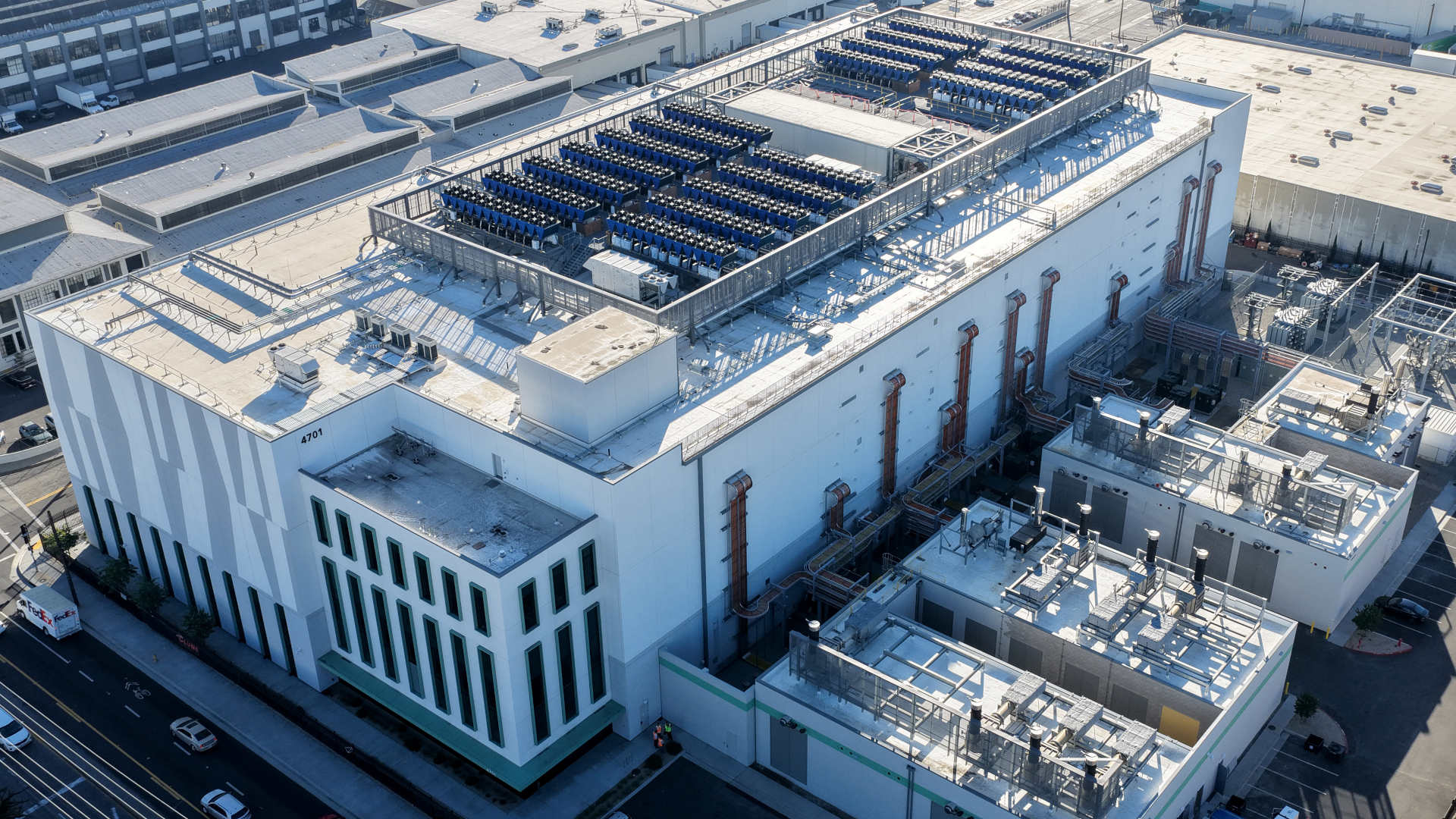
The IEA confirms that globally, data centres consumed around 415 terawatt-hours (TWh) of electricity in 2024. Equivalent to 1.5% of global supply. In the same year, global investment in data centres nearly doubled since 2022, reaching roughly half a trillion dollars. That is not the footprint of something light and virtual.
To put 415 TWh into context: using the UK government's 2025 average electricity conversion factor of 0.177 kgCO2e per kWh, it translates to roughly 73.5 million tonnes of CO2 equivalent. That is an illustrative figure, not a precise global estimate as grid carbon intensity varies enormously by country, but as a way of grasping the scale of what we are talking about, it is hard to ignore.
What the IEA highlights as especially significant is not just the volume of electricity involved, but its concentration. A typical AI-focused data centre can consume as much electricity each year as 100,000 households. The largest facilities being built now could consume 20 times more than that. These facilities tend to cluster in the same places, putting enormous strain on local grids. In Ireland, data centres already account for around 20% of metered electricity supply. There are now six US states where data centres consume more than 10% of all electricity supply.
Where This Is Heading
In the IEA's base case, global data centre electricity consumption rises from 415 TWh in 2024 to around 945 TWh by 2030, and to around 1,200 TWh by 2035. In the United States alone, data centres are expected to account for nearly half of all electricity demand growth between now and 2030. By the end of the decade, the US will use more electricity on data centres than on aluminium, steel, cement, chemicals and all other energy-intensive industries combined.
The IEA also warns that around 20% of planned data centre projects could face delays due to grid constraints, and that 50% of data centres under development in the US are being built in already-overcrowded clusters, compounding the risk further.
The Carbon Responsibility Gap
Aviation is often used as the benchmark for a hard-to-abate emissions problem. It accounts for around 2.5% of global CO2 emissions. Data centres are not there yet, but the trajectory is clear, and unlike aviation, this sector is still in its build-out phase. The decisions being made right now about energy sourcing and infrastructure planning will shape the emissions profile of AI for decades.
That makes the picture from CDR.fyi's leaderboards all the more striking. Of course Microsoft lead the way in durable carbon removals with 35 Mt purchased. Frontiers are next with 1.8 Mt, followed by Google with 1.1 Mt.
If AI infrastructure is becoming one of the defining economic forces of our time, and one of its fastest growing sources of emissions, where are companies like OpenAI in the public climate conversation? If they have chosen not to address their harder-to-abate emissions through carbon markets, in favour of other decarbonisation strategies, what are those strategies and how are they being communicated?
What This Means for Carbon Markets
I want to be clear: carbon credits and removal purchases are not a fix for a systemic problem. The priority should be decarbonisation, more renewables, cleaner grids, faster transmission build-out, better storage and serious infrastructure planning. But today the gap between where we are and where we need to be is bigger than ever, and will take time to close. In the meantime, supporting high-quality climate projects that deliver measurable, verifiable impact is one practical way for companies to begin taking responsibility for the emissions they are driving right now. Not instead of structural change, but alongside it.
The companies building this infrastructure have the resources, the visibility and increasingly the public expectation to do more than tell a product story about AI. Climate responsibility has to show up in energy procurement choices, siting decisions, and yes, in the voluntary markets.
My takeaway from going back to the numbers after that panel: AI's infrastructure boom is not just a technology story. It is an electricity story, a local communities story and a carbon story. And the companies at the centre of it need to start treating it that way.