
How Carbon Compared Works
We help businesses and individuals evaluate, compare, and invest in high-quality carbon removal projects.
Our Process
Carbon Compared provides a standardised approach to evaluate and compare carbon removal projects.
1. Project Verification
We carefully verify all carbon removal projects, ensuring they meet our standards for permanence, additionality, and verification.
2. Standardised Metrics
We analyse each project using consistent metrics including cost per ton of CO₂, storage duration, removal method, and co-benefits.
3. Transparent Results
Access detailed comparisons and analysis to make informed decisions about which carbon removal projects align with your goals and values.
Compare Carbon Removal Projects Side-by-Side
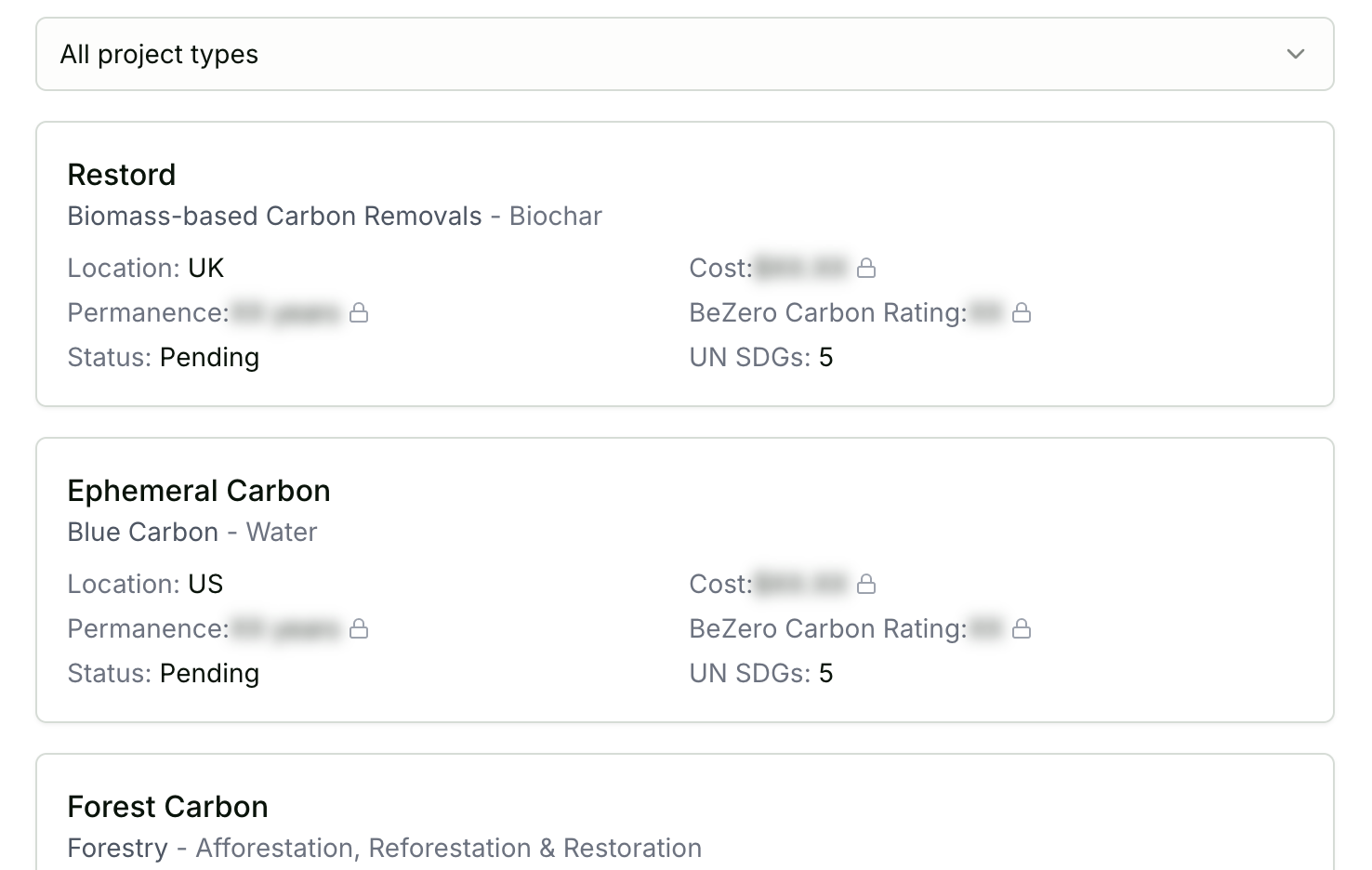
Our interactive comparison tool lets you evaluate verified carbon removal projects across multiple dimensions to find the perfect match for your net-zero sustainability goals.
Multiple Quality Metrics
Compare cost per tonne CO2, permanence duration, BeZero integrity ratings, additionality, and global location all in one comprehensive view.
BeZero Verified Quality
All carbon removal projects undergo rigorous BeZero verification to ensure high integrity, permanence, and real climate impact for your net-zero goals.
Global Carbon Markets
Carbon removal projects from around the world, spanning direct air capture, biochar, enhanced weathering, and nature-based solutions.
Explore by Topic
These pages are built from the projects listed on Carbon Compared right now, so the counts and price ranges change as listings change. All of them are free to browse. Prices for individual projects need a free account.
Browse by Project Type
A plain guide to each project type we list, from biochar to direct air capture, with a live count of the projects available in each.
19 project types listed
See all project typesBrowse by Country
See which countries have projects listed today, with live counts and a link through to every project running in that country.
28 countries listed
See all countriesCarbon Credit Prices
Live price ranges per tonne by project type, plus a plain explanation of what moves the price of a credit.
See price rangesHead to Head Comparisons
Two project types set side by side on how they work, how long the carbon stays stored, and what a tonne costs.
Compare project typesEducational Articles

Carbon Removal Deals In Q4 2026
Three Carbon Removal Deals That Signal Where the Market Is Heading in Q4 2026
Read more
SBTi Corporate Net-Zero Standard. Version 2.0. What's New?
The newly published Version 2.0 of the Corporate Net-Zero Standard from SBTi makes carbon removals a scheduled obligation for the first time. From 2035, large companies must support removals covering at least 1% of their ongoing scope 1, 2 and 3 emissions, rising to 100% of residual emissions by their net-zero year.
Read more
AI's Dirty Secret: Energy Demand of Data Centers
In the United States alone, data centres are expected to account for nearly half of all electricity demand growth between now and 2030.
Read moreCarbon Glossary
Key Terms
Common terminology in carbon removal
Additionality
The principle that carbon removal or emissions reductions would not have occurred without the incentive of carbon finance. Essential for ensuring carbon credits represent real climate benefits.
Afforestation and Reforestation
Afforestation plants trees on land that has not carried forest in recent history; reforestation restores tree cover on land that was forested and has since been cleared. Both remove CO₂ from the atmosphere as the trees grow.
Article 6 (Paris Agreement)
The section of the Paris Agreement governing how countries cooperate on emissions reductions, including transferring them internationally. It sets the rules for authorisation, corresponding adjustments, and a UN supervised crediting mechanism.
Baseline
The reference scenario describing what emissions or carbon storage would have been without the project. Credits are issued for the difference between the baseline and what the project actually achieved.
- View all terms